Shipping Wholesale Building Materials from China
Tiles, sanitary ware, stone, and panels — the heaviest, most breakage-prone, and most weight-sensitive cargo in the wholesale container world, where payload math outranks cube math and every load plan is a physics document.
Most building-material programs are weight-limited before they are volume-limited: tiles and stone ride 20GP boxes that reach payload ratings around 25–28 CBM of cargo, sanitary ware rides in factory protective packaging in 40ft equipment, and stone slabs stand on A-frames in specially braced 20GP loads. Out-of-gauge panels move on open-top equipment booked against exact dimensions.
The two failure modes are mechanical — breakage from bad stacking, shifting loads, and under-anchored stone — and chemical: moisture, which stains cartons, swells gypsum products, and loosens cement-based goods. On the compliance side, construction products face destination-market marking regimes (CE marking in the European Economic Area among them), certain sealants and adhesives fall under dangerous-goods rules, and some product lines have a history of trade measures — all checked per HS before the PO.
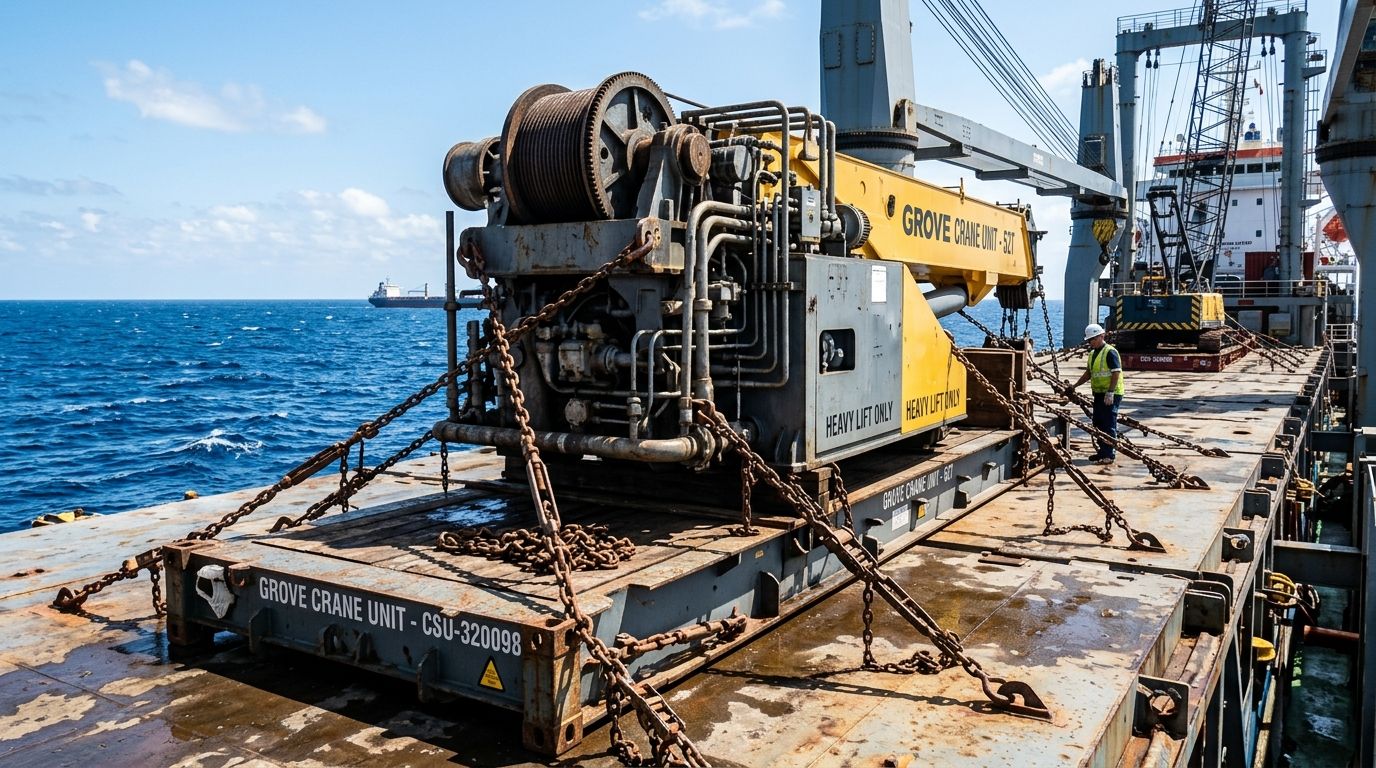
What Each Material Family Demands
Building materials are the category where “fill the box” becomes the wrong question. Model each family separately — payload line and volume line — in the container fill planner, and never let a supplier’s declared CBM override the weight math.
| Cargo Family | Typical Equipment | Loading Practice |
|---|---|---|
| Ceramic tiles & porcelain | 20GP (weight-limited) | Dense and unforgiving: a 20GP cubes out near 25–28 CBM of tiles by payload. Floor-load flat, stacked low and true; corner protectors on every bundle edge; desiccant against carton sweat, which stains cartons and loosens them for transit breakage. |
| Sanitary ware (toilets, basins) | 40GP / 40HQ | Factory-molded cartons with foam or expanded corners; stacked within carton design and braced in door rows. Heavy pieces ride low; glass panels and lids get their own top layer with void filling. |
| Stone slabs (marble, granite, quartz) | 20GP with A-frames | Slabs stand vertically on purpose-built A-frames anchored to the floor; never loose-stacked. Weight concentrates — the frame plan must respect floor ratings, and loading happens with clamps and certified crews. A mis-loaded stone box is a total-loss cargo. |
| Panels, boards & profiles | 40GP / Open Top (OOG) | Flat-packed horizontal with slip sheets between panels; oversized panels shift to open-top equipment booked by dimension — out-of-gauge moves are engineering orders, not improvisation. |
Equipment dimensions follow ISO 668 ratings; payload checks run per shipment with the VGM.
Breakage, Shifting, and the Moisture Problem
Mechanical protection. Rigid cargos fail at edges and at the doors. Every bundle gets corner protection, stacks stay true to carton design, door rows get bracing that bears the voyage’s acceleration, and stone loads get the A-frame engineering described above. The loading survey photographs the bracing before sealing — the record that separates a claim from an argument.
Weight discipline. Concentrated loads respect floor ratings — a “few extra crates” of stone past VGM is a misdeclaration with safety consequences, and terminals weigh. Mixed programs (tiles plus accessories) balance deliberately rather than loading the heavy goods at one end: heavy low and centered, light goods high and at the doors.
Moisture. Cement-based and gypsum products swell and stain; cartons of tiles soften and then fail under their own stacking weight. Desiccant sized to the voyage, dry goods at packing, and moisture-barrier paper against the container shell are the standard stack — and avoid the mistake of shrink-wrapping cargos that need to breathe, which traps condensation inside the load.
Compliance Notes for Construction Goods
- Construction product marking. Destination regimes attach marking and performance-documentation duties to construction products — CE marking under the EU Construction Products Regulation is the flagship example; verify what the market of sale requires before production.
- Dangerous-goods edges. Certain adhesives, sealants, and chemical construction products fall under IMDG ocean dangerous-goods rules — declare them or ship alternatives; discovered undeclared DG stops the box at the gate.
- Trade-measure history. Some ceramic and steel-adjacent building lines have been subject to antidumping or safeguard measures in major markets; screen per HS with the destination broker pre-PO, as on every heavy-goods lane.
- Wood packaging. Crates, pallets, and dunnage in this category are frequently wooden — ISPM-15 stamps must be present and legible.
Breakage and moisture are inspection items too: the loading survey covers packaging condition and bracing before the seal.
FCL vs LCL for Building Materials
Building materials are near-perfect FCL cargo and near-terrible LCL cargo: heavy, breakable, and unattractive to deconsolidate — a tonne of tile in a groupage box pays its weight-based share at the destination CFS and takes CFS handling it does not forgive. Full boxes with engineered loads are the norm; the only honest LCL uses are small accessory or sample batches. Multi-supplier programs consolidate into full boxes instead — the dispatch discipline is in the consolidation process, and the US Gulf lane is a common destination for this category’s river-and-rail economics.
Frequently Asked Questions
How many tile cartons fit in one 20GP?
Fewer than volume math suggests: tiles are payload-limited cargo, and a 20GP legally carries only so many tonnes — typically filling somewhere in the mid-20s of CBM before hitting the weight line. Enter carton weight and dimensions into the container fill planner; it flags the weight limit and shows whether your program is volume-bound or weight-bound. The same discipline applies to stone.
Can stone slabs ship loose-stacked in a normal container?
No. Slabs travel vertically on engineered A-frames anchored to the container floor — loose flat stacks shift, crack, and have caused catastrophic loading accidents; certified crews with clamps load them, and the load plan respects concentrated floor ratings. Slab programs are quoted and booked as engineered loads, and the loading survey documents the anchoring before the seal goes on.
Do construction products need certificates before shipment?
Depends on the market of sale: the EEA's construction-product marking regime is the leading example of duties attached before products circulate, and buyers' projects may add their own documentation requirements. Confirm the destination's current requirements with your broker or the buyer at PO stage; like all category paperwork, it cannot be improvised after the vessel sails.
Request Commercial Ocean Freight RFQ
Submit your container shipment details to our Ningbo port desk for contracted space and spot carrier pricing within 12 hours.
Last reviewed: September 2026 — equipment engineering, payload checks, and compliance requirements are confirmed per shipment and destination market.