China to US West Coast FCL Sea Freight
Dedicated full-container departures from East, South, and North China base ports into Los Angeles/Long Beach, Oakland, and the Pacific Northwest — built for wholesale buyers who stuff furniture, hardware, and mixed merchandise into their own boxes.
FCL shipments from Shanghai, Ningbo, Shenzhen, or Qingdao into Los Angeles/Long Beach typically sail 11–16 days port-to-port (typical, varies by carrier, string, and berth conditions), with Oakland and Seattle–Tacoma on similar loops. Most wholesale volumes move in 40HQ and 40GP equipment; LCL groupage into the Los Angeles CFS suits smaller trial orders.
Ocean freight is quoted per container, while origin THC, documentation, export declaration, and destination terminal/drayage charges are itemized separately — every element is confirmed per booking, and no figure on this page is a rate commitment.
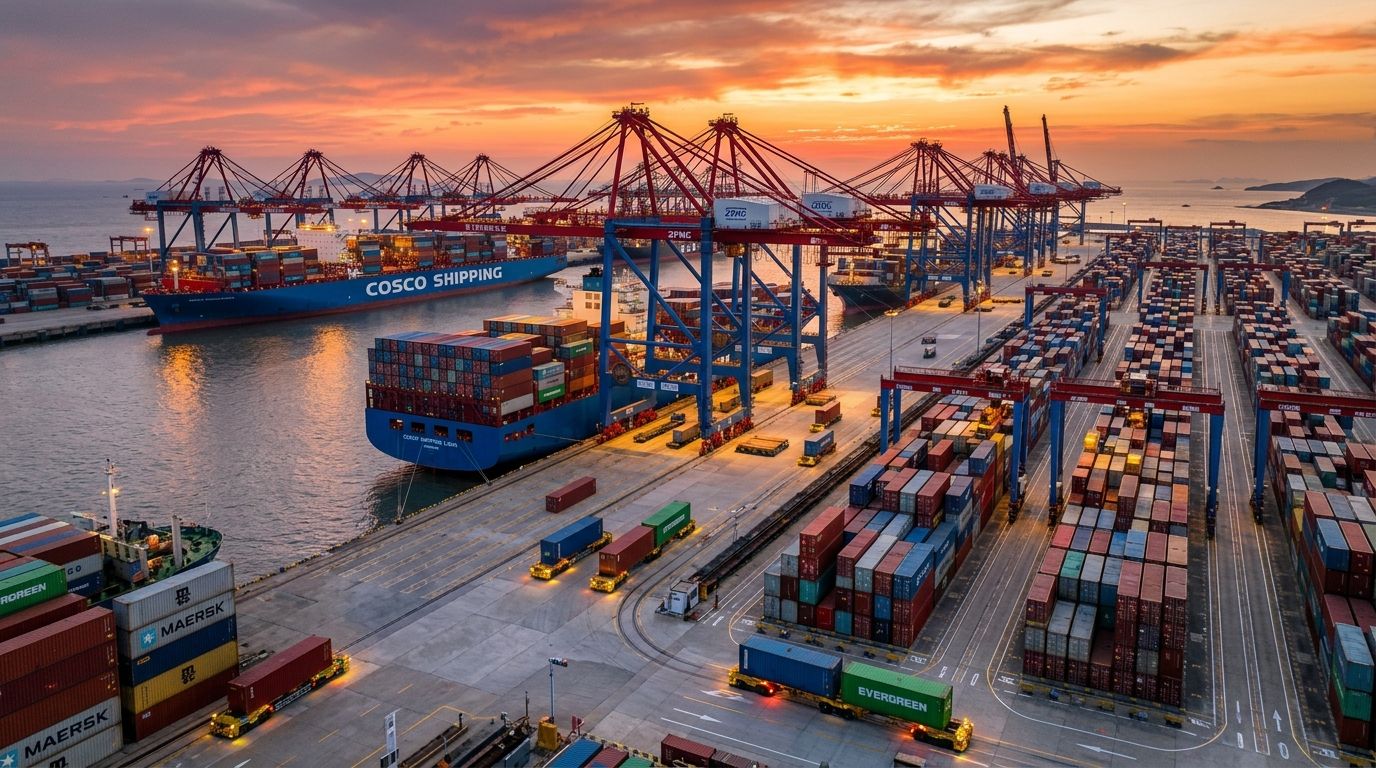
Where This Lane Loads in China
The transpacific southwest is served by three origin clusters. East China — Shanghai (CNSHA) and Ningbo-Zhoushan (CNNGB) — is the deepest FCL departure base, with the widest weekly direct-sailing choice for 40ft equipment. South China — Shenzhen’s Yantian and Shekou terminals (CNSZX) plus Guangzhou Nansha — is the natural load point for Pearl River Delta furniture, hardware, and electronics factories. North China — Qingdao (CNTAO) — collects Shandong province’s building materials and heavy goods. Booking one origin matters: inland trucking a stuffed container between provinces adds cost and calendar days to the factory-to-vessel leg.
For wholesale programs drawing on suppliers from two or more clusters, the practical answer is a buyer’s consolidation — collect goods into one CFS near the departure port, then load a single FCL box instead of paying two partial containers.
| Origin Cluster | Base Ports | Typical Wholesale Cargo |
|---|---|---|
| East China | Shanghai (CNSHA), Ningbo (CNNGB) | Textiles, furniture, general merchandise |
| South China | Shenzhen Yantian/Shekou (CNSZX) | Furniture, hardware, home goods |
| North China | Qingdao (CNTAO) | Building materials, machinery, steel goods |
| Port Pair | Typical Transit | Inland Reach |
|---|---|---|
| Ningbo → LA / Long Beach | 11–13 days | Rail ramps: Chicago, Dallas, Memphis |
| Shanghai → LA / Long Beach | 11–14 days | IPI via import rail from LB |
| Qingdao → LA / Oakland | 13–16 days | Northern California via USOAK |
| Shenzhen → LA / Long Beach | 12–16 days | Southeast US via all-water USEC alt. |
All ranges are typical pilot-to-pilot berth schedules and vary by carrier, loop, season, and port congestion.
US West Coast Terminals and Inland Moves
Los Angeles/Long Beach (USLAX/USLGB) is the default gateway: the largest container complex on the lane and the departure point for import-loaded rail toward Chicago, Dallas, Memphis, and the Ohio Valley. Oakland (USOAK) shortens drayage for Northern California distribution centers, while Seattle–Tacoma serves Pacific Northwest retailers and upper-midwest rail corridors. If your DC sits in the Southeast, compare this lane against the all-water US East Coast service before booking — inland rail from the West Coast is not always the cheaper or faster door answer.
Intermodal containers gated onto rail at Los Angeles still consume chassis and free time while queued, so wholesale buyers with inland ramp destinations should confirm the free-time terms separately for the port and the rail leg — they are two different clocks.
FCL vs LCL on the Transpacific Southwest
Ship FCL when
- Your consolidated volume models at roughly two-thirds or more of a 20GP’s usable cube — model it with the container fill planner.
- Cargo is high-value, theft-sensitive, or fragile — one seal, one warehouse handover.
- You need schedule control: FCL follows the vessel, not a CFS consolidation calendar.
- Destination drayage is arranged direct from terminal to your DC, skipping CFS deconsolidation.
Ship LCL when
- A trial or showroom order runs only a few CBM and cannot wait to accumulate volume.
- Supplier production finishes are staggered so widely that holding one box would miss sales windows.
- You accept destination CFS charges billed per W/M (weight or measure) in exchange for per-CBM pricing.
The middle path most wholesale buyers miss: consolidate several suppliers into your own FCL box rather than groupage — you keep multi-supplier pickup but delete the destination deconsolidation fee layer. The mechanics are covered in the wholesale consolidation process.
What a China–US West FCL Quote Is Built From
A transpacific container quote is never one number. It is a stack of separately negotiated pieces, and the structure — not the figure — is what you should compare between forwarders:
- Base ocean freight per container — market- or contract-based, quoted with a validity window and subject to peak-season surcharges (PSS) and bunker adjustment (BAF) cycles.
- Origin charges — terminal handling (THC), booking and bill of lading documentation, export declaration, VGM weighing, and trucking from factory or CFS to the CY.
- Destination charges — destination THC, chassis usage, drayage, ISF/entry filing by your broker, and any exam or storage costs if the box is selected for inspection.
- Free time — demurrage and detention free days are a negotiated contract term; standard tariff free time is short, so confirm the last free day at booking rather than after arrival.
We quote each line in writing and confirm the full set per shipment — this page deliberately gives no rate figures, because transpacific pricing moves weekly.
Operating Pitfalls on This Lane
- Appointment systems and chassis. Q4 import peaks tighten truck appointment slots at LA/LB; arrange destination drayage before the vessel sails, not after berthing.
- Free-time math. Intermodal boxes accrue port and rail clocks independently — model both before committing an inland ramp move.
- Rate validity. Carriers issue transpacific quotes with expiry dates and general rate increase (GRI) cycles; lock space before validity lapses.
- ISF timing. US-bound ocean cargo requires Importer Security Filing data before loading — file early so a data mismatch never delays the sailing.
- Trade-measure exposure. Certain product lines carry AD/CVD measures; verify HS-level status with your broker before the PO is placed, not at entry.
Frequently Asked Questions
How far ahead should I book FCL space from China to the US West Coast?
Ten days ahead of CY cut-off is workable in a normal market; from late summer through the pre-holiday peak, and in the weeks before Chinese New Year, extend the window to about three weeks so equipment and vessel slots are protected. The booking S/O confirms the specific vessel, cut-off, and validity.
Is my cargo better in one 40HQ or split across LCL?
Once your modeled volume approaches roughly two-thirds of a 20GP's usable cube, an FCL box is usually the better economic and security answer; below that, LCL per-CBM pricing plus destination CFS fees is the benchmark. Model the exact break-even with our container fill planner and confirm both options on a live quote.
Can you move my container past the port to an inland rail ramp?
Yes — import-loaded rail from Los Angeles/Long Beach toward Chicago, Dallas, Memphis, and other ramps is arranged at booking as an IPI move. Note that port and rail free time run as separate clocks, and ramp storage terms differ from terminal terms, so inland destinations should confirm free days for both legs.
Request Commercial Ocean Freight RFQ
Submit your container shipment details to our Ningbo port desk for contracted space and spot carrier pricing within 12 hours.
Last reviewed: September 2026 — transit ranges are typical and confirmed per sailing; charges are itemized per booking.